Food and Wine Tours in Food Valley
In Food Valley, in the heart of Emilia-Romagna, food and wine tours are one of the most natural ways to discover wineries, local flavors, and authentic pairings. On Winedering you'll find 22 food and wine experiences, with food and wine itineraries ranging from 1 hour to 10 hours, including guided tastings and regional specialties. Prices start from €41 and go up to €830. Choose your pace and book your food and wine tour in Food Valley in just a few clicks.
The best food and wine tours in Emilia-Romagna that you can't miss
The scent of boiling milk at dawn, the rhythmic sound of rolling pins flattening egg dough, and the sharp, savory aroma of aging cheese in a warehouse. This is the Food Valley. Located in the heart of Northern Italy, specifically the Emilia-Romagna region, this area boasts the highest number of DOP and IGP certified products in Europe, including over 40 distinct culinary icons.
A tour here is rarely just about wine; it is a study in how geography dictates flavor. You might start in the humid plains where dairy cattle thrive, move to the airy attics where balsamic vinegar concentrates over decades, and end in the foothills where vines find the drainage they need. Because production sites—dairies, vinegar lofts, and wineries—are often small, family-run, and spread out across the countryside, a structured tour is the most efficient way to connect these artisanal dots without the stress of logistics.
In Emilia-Romagna, wine and food belong at the same table
In this region, a glass of wine is almost never consumed alone. The local culture is built around the table, where extended lunches are the norm and "aperitivo" is a substantial ritual rather than a quick snack. Winemakers here craft their bottles specifically to cut through the richness of the local cuisine—think sparkling reds to cleanse the palate after fatty cured meats, or structured whites to stand up to rich egg pasta.
Hospitality here is devoid of pretense. You are likely to be welcomed by the producer's family, often in a tasting room that doubles as their dining area or a renovated farmhouse kitchen. On Winedering, a "pairing" implies a thoughtful sequence: wines are chosen to elevate specific local bites, explained by hosts who understand why the acidity in your glass works with the fat on your plate.
How the landscape of Emilia-Romagna shapes what ends up in your glass and on your plate
The geography of the Food Valley is defined by a stark contrast: the flat, fertile Po River plain and the rising slopes of the Apennine Mountains. The plains, with their humidity and nutrient-rich clay soils, are ideal for raising cattle and pigs, leading to the world-famous production of Parmigiano Reggiano and Prosciutto di Parma. In the winter, the heavy fog here provides the necessary humidity for curing meats.
As the elevation rises, the soil changes.
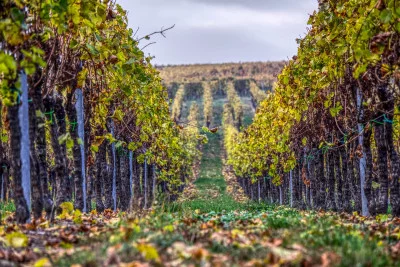
In the foothills, the ground becomes a mix of marl and sandstone, offering better drainage and cooler nighttime temperatures. This "diurnal range"—the difference between day and night temperatures—preserves the acidity in the grapes, which is crucial for the region's sparkling wines like Lambrusco and Pignoletto. This acidity is the backbone of the local diet, providing a fresh counterpoint to the butter, lard, and cheese that dominate traditional recipes.
The pairings you'll remember long after you leave Emilia-Romagna
Memory here is built on contrast: the sharp saltiness of aged cheese softening against the bubbles of a fresh red wine.
What makes pairings in Emilia-Romagna unique is their lack of friction; these wines and foods grew up together over centuries. A slice of sweet, 24-month aged Prosciutto di Parma finds its match in a dry, savory Malvasia, while the rich meat sauce of a ragù demands the tannic grip of a Sangiovese di Romagna. The wines are often lighter in alcohol but high in character, designed to encourage a second glass during a long meal. When choosing a tour, look for those that explicitly mention "light lunch" or "tasting with local products," as the food is as central to the experience as the wine itself.
Cheese, cured meats, and artisan specialties you'll find in Emilia-Romagna
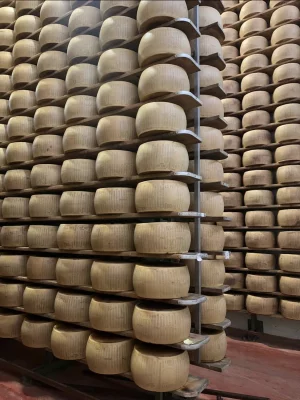
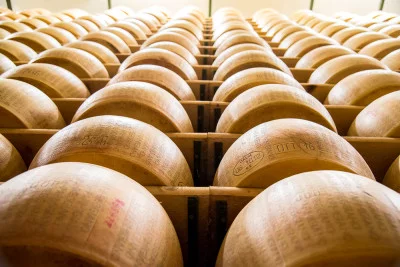
- Parmigiano Reggiano DOP: The "King of Cheeses." Expect a granular texture that crumbles easily, with savory, nutty notes. It is often served in chunks, drizzled with balsamic vinegar, and pairs perfectly with sparkling Lambrusco.
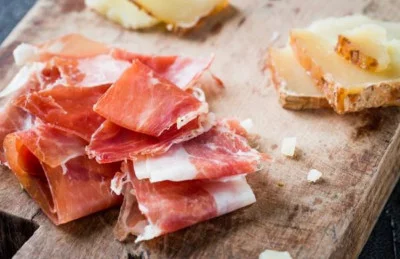
- Prosciutto di Parma DOP: Silky, sweet, and cured only with salt and air. It melts on the tongue and requires a wine with good acidity to cleanse the palate between slices.
- Traditional Balsamic Vinegar of Modena DOP: This is not salad dressing. It is a thick, glossy elixir aged for at least 12 (or 25) years in wooden barrels. It tastes of cooked fruit, wood, and complex acidity.
- Mortadella Bologna IGP: Smooth, aromatic, and studded with cubes of fat. It has a delicate flavor that shines alongside a crisp, slightly aromatic white wine like Pignoletto.
Regional classics in Emilia-Romagna that shine even more with the right glass alongside
- Tortellini in Brodo: Tiny meat-filled pasta served in a clear, rich capon broth. The traditional pairing is Lambrusco; the bubbles cut the richness of the broth, refreshing the palate for the next spoonful.
- Tagliatelle al Ragù: Fresh egg pasta ribbons with a slow-cooked meat sauce. This dish needs a medium-bodied red like a Sangiovese di Romagna or a Gutturnio to match the protein and acidity of the tomato.
- Gnocco Fritto: Puffs of fried dough served hot with cold cuts and soft cheese (Squacquerone). It is greasy in the best possible way and demands a high-acid sparkling wine to balance the fried texture.
Shape your food and wine tour itinerary around the table in Emilia-Romagna
Building an itinerary here works best when you plan around the meal. Since lunch is a significant event—often lasting two hours—it serves as the anchor for your day. You might choose to visit a dairy in the early morning when production is active, followed by a winery visit that naturally transitions into a vineyard lunch.
Consider your driving comfort and wine interest. The region is spread out; driving between a Parmigiano factory near Parma and a winery in the Bolognese hills can take over an hour. If you want to taste freely without monitoring your intake, booking a tour with transport included is a smart decision. Most experiences range from 4 to 8 hours, giving you ample time to immerse yourself without rushing.
The kind of meal you're dreaming about in Emilia-Romagna, from rustic to refined
Dining options on wine tours range from casual to elegant, but the quality of ingredients remains constant. Many agriturismi (farm stays) offer rustic, generous meals served on wooden tables, featuring platters of cured meats, fresh pasta, and house wine. These are convivial, noisy, and authentic.
For a more polished experience, historical wine estates often have dedicated restaurants. Here, you can expect a slower pace, proper stemware, and a menu that reinterprets classics—perhaps a pumpkin tortello with a sage butter emulsion rather than a heavy sauce. Dietary requirements like vegetarian or gluten-free options are widely available, though the region is heavy on dairy and pork, so advance notice is always appreciated.
The wine styles to explore in Emilia-Romagna: from icons to small producers
Emilia-Romagna is divided into two distinct wine personalities. In Emilia (west), sparkling reds rule. Lambrusco is the headline act, coming in varieties ranging from the pale, acidic Sorbara to the dark, tannic Grasparossa. Forget the sugary industrial versions of the past; artisan Lambrusco is dry, crisp, and gastronomic.
In Romagna (east), the focus shifts to still wines. Sangiovese di Romagna offers a fruit-forward, structured red that differs from its Tuscan cousin, often showing more fleshy cherry notes. Albana is the white heavyweight, famously the first Italian white wine to receive DOCG status, known for its golden color and tannic grip, sometimes made as an amber "orange wine" in amphorae.
Small additions in Emilia-Romagna that elevate everything, like a cooking class or walking among the vines
- Cooking Classes: Learning to roll "sfoglia" (egg pasta sheets) is a rite of passage here. These classes often take place in a winery kitchen or a local home and end with eating what you've made.
- Balsamic Vinegar Loft Visits: A visit to an "Acetaia" is essential. You'll climb to the attic to smell the evaporating vinegar and taste the difference between 12-year and 25-year aging.
- Museum Visits: This is also the land of Ferrari and Lamborghini. Many tours combine food and wine with a stop at a motor museum, offering a different kind of sensory overload.
What a food and wine tour in Emilia-Romagna looks like, step by step
A typical day starts early. Dairy production happens at dawn, so a morning pick-up is common if you want to see the cheese-making process. You'll arrive at a producer, put on protective gear, and walk through the steam of the production floor. Afterward, a tasting of different cheese ages sets the baseline for your palate.
Mid-morning often involves a shift in scenery—perhaps a drive to a vinegar loft or a castle village. Lunch is the main event, usually hosted at a winery. You will tour the cellar, learn about the fermentation methods (like the Charmat method for sparkling wines), and then sit down for a multi-course meal paired with the estate's wines. The afternoon is generally slower, reserved for a scenic drive or a final, lighter tasting before returning. Pricing is transparent, and live availability means you can secure your spot instantly.
Winery visits in Emilia-Romagna, with guided pairings and storytelling
The welcome at an Emilian winery is warm and direct. You won't just see barrels; you'll likely walk the vineyard rows to understand the soil. Hosts here are eager to explain the rehabilitation of native grapes that were once nearly forgotten.
Tastings are rarely standing at a counter. You sit down. The wines are poured in flights, allowing you to compare a sparkling Pignoletto against a still one, or a young Sangiovese against a Riserva. The focus is on education—understanding how the clay soil imparts structure or how the ancestral method creates a cloudy, yeasty pét-nat style wine.
A meal in Emilia-Romagna that goes beyond a simple stop
Lunch is not merely fuel; it is a cultural showcase. Expect a sequence: an appetizer of fried gnocco and salumi, a first course of fresh pasta (tortellini, tagliatelle, or lasagne), and often a second course of meat, followed by a local dessert like Zuppa Inglese.
The pacing is deliberate. You are meant to linger. In a winery setting, the winemaker might join you for coffee, sharing stories about the harvest or the family history. It transforms the meal from a transaction into a memory.
Time to breathe in Emilia-Romagna, with scenic routes and village strolls
Between the intense flavors of cheese and wine, the landscape offers a visual palate cleanser. The drive along the Via Emilia or up into the Colli Bolognesi offers views of medieval towers, red-brick farmhouses, and endless geometric rows of vines.
Good tours leave buffer time. You might stop in the village of Castelvetro or Dozza to walk off the lunch, admire the painted walls, or simply grab an espresso. These unscripted moments allow the experience to settle before you head back to the city.
Choose the right food and wine tour in Emilia-Romagna for your pace
Your choice depends on your stamina and your base location. If you are staying in Bologna, Parma, or Modena, you have excellent options ranging from half-day deep dives to full-day excursions. Consider how much you want to eat versus how much you want to learn about wine specifically.
Private tours offer the most flexibility, allowing you to linger in the vinegar attic or skip a course at lunch. Shared small-group tours are fantastic for meeting other travelers and usually offer the best value while keeping the experience intimate. Check the inclusions carefully—some focus heavily on the famous "Three Kings" (Cheese, Ham, Vinegar) with wine as a side note, while others are wine-centric with food as the accompaniment.
Short food and wine experiences in Emilia-Romagna that still feel rich and complete
If you are short on time, a half-day tour is a potent option. These usually focus on a single producer or a tight pairing of two (e.g., a winery that also serves local cold cuts). You get the full storytelling experience and a guided tasting without committing your entire day.
These are perfect for business travelers with a free morning or those passing through on the train. You still get the authenticity—the handshake with the maker, the sensory details of the cellar—but in a condensed format that leaves your evening free for exploring the city center.
Food and wine weekends in Emilia-Romagna for couples and friends
A weekend allows you to peel back the layers. Day one can be dedicated to the icons—Parmigiano, Balsamic, and big-name Lambrusco houses. Day two can explore the niche producers in the hills of Romagna or the Colli Piacentini.
This pace removes the rush. You can enjoy a long, lazy lunch on Saturday and a sunset aperitivo on Sunday. It's an ideal format for friends or couples who want to celebrate, offering a mix of education and pure leisure. Booking flexible experiences allows you to adjust your start times to suit a relaxed morning.
Overnight stays in Emilia-Romagna that make the atmosphere part of the memory
Staying at a winery or an agriturismo changes the texture of your trip. The crowds disappear after 5 PM. You watch the sun dip behind the Apennines with a glass of wine in hand, surrounded only by silence and vines.
Many estates offer beautifully restored rooms with modern comforts. Waking up in the vineyard means you can enjoy a breakfast of local jams and cakes before rolling right into a tour, with zero travel time required. Look for packages that bundle the stay with a dinner or a comprehensive tasting.
Gift a food and wine tour in Emilia-Romagna that feel personal
An experience here is a gift of flavor. For the foodie, a tour covering the production of Balsamic Vinegar and Parmigiano is bucket-list material. For the wine lover, a vertical tasting of Sangiovese di Romagna or a masterclass in Lambrusco styles shows you know their passion.
Winedering vouchers offer flexibility, letting the recipient choose the date that works for them. The pricing is clear, and the validity is generous, making it a safe yet thoughtful choice for weddings, anniversaries, or simply to say thank you.
When to book a food and wine tour in Emilia-Romagna?
The Food Valley is a year-round destination, but the atmosphere shifts with the calendar. Spring brings green hills and mild temperatures; summer is hot but vibrant; autumn is harvest time; winter is foggy and atmospheric.
Availability for top-tier artisanal producers can be tight, especially on weekends. It is wise to book at least a few weeks in advance for spring and autumn dates. Winter offers more spontaneity, while summer requires planning around the heat—morning tours are often more pleasant.
Harvest season in Emilia-Romagna, when the region comes alive
September and October are electric. The vineyards are full of pickers, tractors are hauling grapes, and the air in the winery smells of fermenting must. It is a busy time, so tours may be slightly modified to stay out of the way of production, but the energy is unbeatable.
You might taste juice fresh from the press or see the destemming machines in action. The weather is usually crisp and clear, perfect for vineyard walks. Because this is peak season for wine lovers, booking a month out is recommended to secure your preferred slot.
Autumn and winter in Emilia-Romagna, for deeper dishes and comforting wines
As the temperature drops, the food becomes richer. This is the season for truffles (in the hills), chestnuts, and game. The fog ("nebbia") rolls into the plains, creating a quiet, mysterious atmosphere that makes the warmth of a cellar or a trattoria even more inviting.
Heavy reds and aged balsamic vinegar taste best now. It’s a time for slow travel, fewer tourists, and deeper conversations with hosts who have more time to chat. Ensure you choose experiences with indoor tasting rooms.
Spring and summer in Emilia-Romagna, for outdoor meals and lighter pairings
From April to June, the region blooms. Lunch tables move outside to terraces and gardens. The menu shifts to include fresh vegetables, asparagus, and lighter pasta dishes. It is the perfect time for sparkling Pignoletto and chilled Lambrusco.
July and August can be quite hot, especially in the plains. Smart travelers book morning tours that finish with a lunch in the cooler, breezy hills. This is prime time for picnic experiences among the vines or sunset tastings that take advantage of the long daylight hours.
Food and wine events in Emilia-Romagna, when the calendar adds extra magic
The region hosts numerous festivals celebrating specific ingredients—from the White Truffle Festival in the hills to local wine fairs ("Sagre"). These events offer a chaotic, joyful immersion into local life, with street food stalls and communal tables.
If you plan to visit during a major event like Vinitaly (nearby in Verona) or local harvest festivals, accommodation and tours fill up fast. Booking a private tour during these times can provide a structured oasis in the middle of the festive crowds. Check the local calendar and lock in your dates early.
Food Valley: Good to know
The average price of a wine tasting with winery visit in Food Valley is around €55. Depending on the experience, prices range from €20 to €90. Booking in advance ensures availability and the best prices.
Here are the top wineries to visit in Food Valley:
- Castello di Luzzano
- Agriturismo San Paolo
- TerraQuilia - La Cantina
- Giacobazzi vini
- CANTINA VENTIVENTI
- Podere Beghetto
- Casa Benna
- Cantina Cleto Chiarli
Here are the best wine tastings to book in Food Valley:
- Unlimited tasting: wine tour plus lunch or dinner at Cantine Zuffa
- Winery Tour and Light Wine Tasting at Podere Riosto in the Bologna Hills
- Wine Tasting at La Camina Winery in Colli Piacentini
- Visit and Wine Tasting at Torre Ca' Bianca in Colli Bolognesi - Bologna DOC
- Premium wine tour and tasting at Cantina Lodi Corazza in Colli Bolognesi
- AperiVigna - Wine Tasting Aperitivo with Castle View at Marino Barani & Figli
- Tasting of Colli Bolognesi wines and typical products at the AGRIVAR winery
- Fall in love with the Emilian style at Medici Ermete Estate
Continue with a social account