

Wine Tours in Veneto from Verona and Venice
Wine tours in Veneto usually set off from its main cities and head into the surrounding wine areas. On Winedering you'll find 84 tours, lasting from 1 hour to 3 days, with prices from €31.25 to €21,500. The main departure points are Verona, Venice, Padova, Treviso and Villafranca di Verona. Tours also depart from 13 more cities. Enjoy guided tastings, winery visits and authentic local pairings across Veneto.
Of these tours, 30+ come to pick you up where you are staying and 40+ start from a meeting point set by the host.
Among these tours, one is a vineyard hike: walking routes through the vines, with tastings along the way.

Veneto, Padua, Padova -
(Euganean hills)
5 Hours
Min 2, Max 8
From €110

Veneto, Venice, Venice City -
(Euganean hills, Piave, Venice)
6 Hours 30 Minutes
Min 2, Max 8
From €130

Veneto, Verona, Verona -
(Valpolicella, Amarone, Valpolicella Classica, Valpantena)
6 Hours
Min 1, Max Not Specified
From €21,500
Veneto, Padua, Padova -
(Euganean hills)
5 Hours
Min 2, Max 8
From €130

Veneto, Padua, Abano Terme -
(Euganean hills)
4 Hours
Min 2, Max 8
From €80

Veneto, Padua, Due Carrare -
(Euganean hills)
6 Hours
Min 2, Max 8
From €150

Veneto, Verona, Verona -
(Valpolicella, Amarone, Valpantena)
2 Hours
Min 1, Max 7
From €63

Veneto, Venice, Venice City -
(Valdobbiadene, Prosecco, Piave, Venice)
7 Hours
Min 2, Max 8
From €189

Veneto, Verona, Soave -
(Soave)
4 Hours
Min 2, Max 10
From €110
Veneto, Venice, Venice City -
(Valdobbiadene, Prosecco, Cartizze, Piave, Venice)
6 Hours
Min 2, Max 8
From €489 (Groups Discount Available!)

Veneto, Verona, Verona -
(Valpolicella, Amarone, Valpolicella Classica, Valpantena)
4 Hours 30 Minutes
Min 1, Max 30
From €105
Veneto, Treviso, Treviso -
(Valdobbiadene, Prosecco, Piave)
3 Hours
Min 2, Max 15
From €140
The best food and wine tours in Veneto that you can't miss
The experience often begins with a specific sound: the quiet crunch of gravel underfoot in a courtyard, or the sharp pop of a cork echoing against stone walls. In Veneto, wine is not just an industry; it is the rhythm of daily life that connects the Dolomite mountains to the Adriatic lagoon.
This region covers over 90,000 hectares of vineyards, offering perhaps the most diverse viticultural landscape in Italy. You might find yourself in the cool, steep hills of Valdobbiadene tasting crisp sparkling wines one day, and in the warmer, clay-rich valleys of Valpolicella sipping robust reds the next. Navigating this variety on your own can be complex.
A guided tour simplifies this vastness. It grants you access to family-run estates that do not always open to the public and places you at tables where the food is as locally rooted as the vines outside. Here, the distance between the producer and your glass is measured in steps, not miles.
In Veneto, wine and food belong at the same table
There is a local concept here called the ombra—a small glass of wine enjoyed socially, often standing up, accompanied by a bite of food. It illustrates a fundamental rule of the region: wine is rarely drunk alone. Whether it is a quick cicchetto (small snack) in a Venice backstreet or a three-hour Sunday lunch in the countryside, the glass and the plate are inseparable partners.
Authenticity here is defined by shared spaces. You are likely to eat in a renovated farmhouse dining room or a tasting area directly overlooking the barrels. The producers you meet are often the same people who pruned the vines in winter. Pairing on Winedering means a deliberate culinary match, designed to show how the acidity of a white wine cuts through a fatty cheese, or how the tannins of a red wine bind with a savory meat dish.
How the landscape of Veneto shapes what ends up in your glass and on your plate
The geography of Veneto is dramatic and varied, shifting from the limestone peaks of the Alps down to the flat, alluvial plains and finally the sandy coast. This variation creates distinct microclimates.
In the north, cool winds and significant altitude variations preserve high acidity in grapes like Glera, essential for Prosecco. Near Lake Garda, a Mediterranean-like microclimate allows olive trees and citrus to grow alongside vines, producing savory, medium-bodied wines. In the volcanic soils of Soave and the Euganean Hills, you find wines with distinct mineral notes—often described as a stony or flinty finish.
The cuisine follows the land just as closely. The humid plains are the rice bowl of Italy, producing the Nano Vialone used for risotto. The mountains provide pasture for dairy cows, yielding rich cheeses like Asiago and Monte Veronese. When you sit down to eat, the ingredients on your plate are usually grown within a short drive of where you are sitting.
The pairings you'll remember long after you leave Veneto
The best pairings in Veneto work because they have evolved together over centuries.
Imagine the richness of a slow-cooked beef stew meeting the structured power of an Amarone. The wine’s intensity stands up to the meat, while the food softens the wine’s tannins. This is not accidental chemistry; it is tradition. With over 14 DOCG appellations in the region, the wine styles have distinct personalities that demand specific foods.
When you browse tours, look for those that explicitly mention "lunch pairing" or "tasting with local specialties." These experiences move beyond simple sampling to demonstrate how local ingredients elevate the wine in your glass.
Cheese, cured meats, and artisan specialties you'll find in Veneto
- Sopressa Vicentina: A large, aged salami often made with a touch of garlic. It has a soft, almost melting texture and a savory, peppery finish.
- Asiago Cheese: Ranging from fresh (pressed, milky, mild) to stravecchio (aged, crumbly, intense). It pairs effortlessly with medium-bodied red wines or structured whites.
- Monte Veronese: A cow’s milk cheese from the Lessini mountains. The younger versions are sweet and creamy; the aged versions develop a spicy piquancy.
- Radicchio di Treviso: A bitter, crunchy winter vegetable that acts as a perfect foil for fatty meats and rounder red wines.
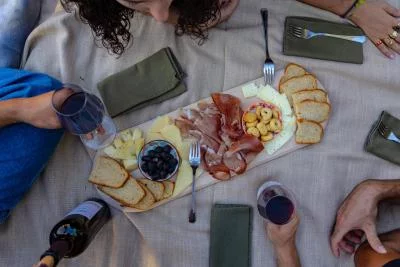
On a tour, you will typically encounter these served on a shared wooden board (tagliere), allowing you to experiment with different wine combinations bite by bite.
Regional classics in Veneto that shine even more with the right glass alongside
- Risotto all'Amarone: A visually striking dish where the rice is cooked with the region's most famous red wine. It requires a wine with equal weight and structure to match the intensity of the flavor.
- Baccalà alla Vicentina: Dried cod, rehydrated and slow-cooked with milk, onions, and anchovies until creamy. It is rich and savory, demanding a white wine with good acidity or a light red to cleanse the palate.
- Bigoli in Salsa: Thick, whole-wheat spaghetti served with a sauce of onions and anchovies. The saltiness here pairs brilliantly with a crisp white wine or a savory sparkling wine.
Shape your food and wine tour itinerary around the table in Veneto
A good itinerary in Veneto is often built from the meal outward. You might choose a winery visit specifically because it ends with a lunch overlooking the Valpolicella valley, or a tour that starts with a market visit in a historic town.
Consider your constraints honestly. If you want to taste multiple robust red wines, a tour with a driver is essential for safety and relaxation. If you have only a half-day, focus on one specific area—like the Prosecco hills or the immediate surroundings of Verona—rather than trying to cross the region. Check the "inclusions" section of any tour to see exactly what kind of meal is provided, from light snacks to multi-course feasts.
Filter your search by "lunch included" or "private driver" to find the logistics that suit your group.
The kind of meal you're dreaming about in Veneto, from rustic to refined
Dining settings in Veneto range from the deeply traditional to the elegantly modern. You might find yourself at a sturdy wooden table in an agriturismo, where the menu is fixed based on what the farm produced that morning. These meals are generous, informal, and slow-paced.
Alternatively, many historic wine estates have invested in refined hospitality, offering seated tastings in frescoed villas or glass-walled dining rooms with panoramic views of the vines. Here, the service is more formal, and the presentation is precise. Most hosts can accommodate dietary needs like gluten-free (polenta is a safe local staple) or vegetarian options if notified in advance. Choose the setting that matches the occasion, whether it is a casual Tuesday or a milestone celebration.
The wine styles to explore in Veneto: from icons to small producers
Veneto is a powerhouse of Italian wine, but it is not a monolith. The most famous names—Amarone, Prosecco, Soave—are just the headlines.
You will encounter "icons," historic families who have been making wine for generations and often helped establish the DOC regulations. Their estates are often grand, and their cellars are architectural feats. In contrast, "small producers" might operate out of a garage-sized cellar, focusing on organic farming or recovering nearly extinct native grapes like Raboso or Durella. These visits often feel more intimate, with the winemaker pouring the bottle themselves.
Look for tours that offer a "vertical tasting" (same wine, different years) or a comparison of production methods, such as the difference between steel tank and oak barrel aging. This is where you learn the nuance behind the label.
Small additions in Veneto that elevate everything, like a cooking class or walking among the vines
- Cooking Classes: Learn to stir the perfect risotto or roll out fresh pasta. This adds a tactile layer to your understanding of the region's food culture.
- Vineyard Walks: Stepping into the soil helps you understand the terroir—seeing the stones, feeling the slope, and touching the vines.
- Olive Oil Tasting: Particularly near Lake Garda and the Valpolicella hills, high-quality olive oil is produced. A tasting reveals the peppery, green notes of fresh oil.
These activities usually add 1-2 hours to an itinerary but significantly deepen the connection to the place. They are excellent for families or groups with mixed levels of wine interest.
What a food and wine tour in Veneto looks like, step by step
Most full-day tours follow a comfortable rhythm designed to balance learning with leisure. Your guide or driver typically collects you from a central meeting point or your hotel around 9:00 or 10:00 AM.
The morning usually features the first winery visit. This is when palates are fresh. You will tour the production areas—fermentation tanks, barrel rooms, and drying lofts (fruttai) if in Valpolicella. A guided tasting follows. Around midday, the pace slows down for lunch, which is either hosted at the winery or a nearby traditional restaurant. The afternoon might include a second, smaller producer or a scenic stop in a medieval village like Soave or Asolo.
You return in the late afternoon, typically between 4:00 and 5:00 PM. Tours listed on Winedering offer transparent pricing and live availability, so you know exactly when your day is secured.
Winery visits in Veneto, with guided pairings and storytelling
A visit here is rarely just a drink at a counter. You are welcomed by a host who contextualizes the wine within the estate’s history. You will learn about the specific grape varieties—Corvina, Garganega, Glera—and the choices made in the vineyard.
The tasting portion is a seated affair. Wines are poured in a logical sequence, often from lightest to heaviest. The "pairing" element means you are served specific bites designed to enhance the wine, not just generic crackers. You leave with a clear understanding of why the wine tastes the way it does, backed by the authority of the producer.
A meal in Veneto that goes beyond a simple stop
Lunch on a wine tour is a main event, not a refueling stop. Expect seasonal ingredients: asparagus in spring, mushrooms and pumpkin in autumn. The pacing is Italian—meaning there is no rush to turn the table.
If you are dining at a winery, the wines served will be their own, matched perfectly to the courses. If you are at a trattoria, the wine list will likely feature local bottles that the restaurateur is proud to showcase. Expect at least two to three courses, usually including a pasta or rice dish followed by a protein.
Time to breathe in Veneto, with scenic routes and village strolls
The drive between wineries is often as impressive as the destination. The roads wind through terraced hills, past cherry orchards and ancient stone walls. A good itinerary leaves room for these visual moments.
You might stop for a photo at a panoramic viewpoint in the Valdobbiadene hills, or take a twenty-minute walk through the walled town of Soave to see the castle. These pauses prevent "palate fatigue" and allow you to absorb the atmosphere. When booking, check if the tour mentions "free time" or "village visit" to ensure a balanced pace.
Choose the right food and wine tour in Veneto for your pace
Your choice depends largely on how much time you want to dedicate and how deep you want to dive. There is a significant difference between a casual introductory tasting and a comprehensive regional exploration.
For a relaxed experience, a shared small-group tour is often the best value and offers a social atmosphere. If you have specific interests—like hunting for vintage Amarone or visiting specific organic farms—a private tour gives you control over the schedule. Always check the cancellation policy and instant confirmation features to book with confidence.
Compare the duration and the number of wineries included, then book the one that fits your travel rhythm.
Short food and wine experiences in Veneto that still feel rich and complete
Not every wine experience requires a full day. Short tours, lasting 2 to 4 hours, are perfect for travelers with tight schedules or those staying in cities like Verona or Venice who want a quick escape.
These experiences typically focus on one high-quality winery visit with a generous tasting and snacks, or a guided walking food tour within a city. You get the storytelling and the flavor without the commitment of a full-day excursion. Look for "guided tasting with light lunch" or "aperitivo tour" options.
Food and wine weekends in Veneto for couples and friends
A weekend allows you to explore two distinct sides of the region. You might spend Saturday in the sparkling hills of Conegliano-Valdobbiadene and Sunday in the red-wine haven of Valpolicella.
This pace is ideal for couples or groups of friends celebrating a special occasion. It removes the rush, allowing for long, lazy lunches and evening strolls in the vineyards. When planning, book your Sunday tastings well in advance, as some smaller family wineries are closed or have limited hours on Sundays.
Overnight stays in Veneto that make the atmosphere part of the memory
Staying overnight in wine country changes the experience entirely. The crowds disappear in the late afternoon, leaving you with the golden hour light over the vines and absolute silence.
Options range from rustic agriturismi (farm stays) to luxury wine resorts with spas. The key benefit is proximity: you can enjoy dinner with wine pairing without worrying about driving. Wake up to a breakfast of local jams and pastries before starting your day. Look for tour packages that bundle the stay with the tastings for a seamless trip.
Gift a food and wine tour in Veneto that feel personal
Giving a wine experience is giving a memory. If the recipient loves bold, structured red wines, a Valpolicella tour is the obvious choice. for those who prefer light, celebratory drinks, a Prosecco road tour is perfect.
Winedering offers flexible booking options, which is crucial for gifting. You can select a specific date if you know their travel plans, or choose a voucher option where available. The transparent descriptions ensure the recipient knows exactly what to expect, from the number of tastings to the type of lunch.
When to book a food and wine tour in Veneto?
Veneto is a year-round destination, but the character of the visit changes with the calendar. Availability fluctuates, so timing your booking is important.
Spring and autumn are the peak seasons for wine tourism, offering mild weather and beautiful scenery. Summer can be hot, making morning tours preferable. Winter is quiet and intimate, perfect for red wine lovers. For specific dates, check the live calendar on the tour page to secure your spot.
Harvest season in Veneto, when the region comes alive
Harvest generally runs from late August (for sparkling wines) through October (for red wines). The vineyards are buzzing with activity. You might see tractors hauling trailers full of grapes and smell the fermenting must in the air.
Tastings during this time feel electric. Producers are busy but often excited to share the promise of the new vintage. Note that this is the busiest time of year; booking weeks in advance is highly recommended as availability is limited.
Autumn and winter in Veneto, for deeper dishes and comforting wines
As the temperatures drop, the region’s cuisine shifts to comfort food. Fog often settles in the valleys, creating a moody, atmospheric backdrop.
This is the best time to taste Amarone and other structured reds, which pair beautifully with the season’s mushrooms, chestnuts, and game dishes. The pace is slower, and you often get more personal attention from hosts who are less rushed than in summer. Ensure you choose tours that include indoor tasting rooms and warm dining areas.
Spring and summer in Veneto, for outdoor meals and lighter pairings
From April to June, the vines turn a vibrant green and wildflowers bloom between the rows. The weather allows for tastings on terraces and lunches in garden settings.
This is the season for crisp white wines like Soave and sparkling Prosecco. It is also the perfect time for vineyard picnics or bike tours. In July and August, temperatures can be high, so prioritize tours that start early in the morning or offer air-conditioned transport.
Food and wine events in Veneto, when the calendar adds extra magic
The region hosts numerous festivals, from the massive Vinitaly fair in Verona (usually April) to small town sagre celebrating specific ingredients like asparagus, cherries, or chestnuts.
Visiting during these times adds a layer of local culture to your trip, but it also means accommodation and services fill up fast. If you plan to travel during a major event, lock in your guided tours early to ensure you have a structured respite from the crowds.
Veneto: Good to know
How much does a wine tour in Veneto cost?
The average price of a wine tour in Veneto is around €578. Depending on the experience, prices range from €31.25 to €21,500. Booking in advance ensures availability and the best prices.
Can I do just a wine tasting instead of a full tour in Veneto?
Here are the best wine tastings to book in Veneto:
- Prosecco DOCG tasting, vineyard walk, and charcuterie platter at Serre di Pederiva
- Amarone Experience at Fratelli Vogadori in Valpolicella
- Corvina Wine Tasting & Tour at Poggio delle Grazie on Lake Garda
- Prosecco Superiore Tasting & Food Pairing at Fasol Menin in Valdobbiadene
- Wine Tasting with Light Lunch at Corte Borghetti in Valpolicella
- Tasting of Valdobbiadene DOCG with Cicchetti at Il Casale Wine Experience
- Tour, tasting and gourmet light lunch at Farina Wines in Valpolicella Classica
- Winery Tour and Tasting with Local Foods at Farina in Valpolicella
Can I book a wine weekend or a stay at a winery in Veneto?
Yes: on Winedering you can book 6 stays in Veneto, from a wine weekend to a longer trip, sleeping mostly at wineries, wine resorts and farm stays among the vines, nearly always with a wine tasting included. Discover Wine holidays in Veneto.
Where do wine tours in Veneto usually depart from?
The main departure points for wine tours in Veneto:
Do wine tours in Veneto pick you up at your hotel?
30+ of these wine tours come to pick you up at the address you give, usually your hotel. You provide it when you book.
See the wine tours with pickup in Veneto
Do wine tours in Veneto have a fixed meeting point?
40+ of these wine tours start from a meeting point set by the host, shown in the experience details before you book.
See the wine tours with a meeting point in Veneto
Continue with a social account